Centralized Pneumatic: Fitting For Industry

Centralized pneumatic air tools (not to be confused with Central Pneumatic, a brand name) offer quite a bit in terms of pricing, variety, durability, and efficiency. The concept behind central pneumatic is simple: you acquire a single, powerful pneumatic pump that sits quietly in one corner of your facility. Long, airtight pneumatic lines extend from that central pump out to wherever the work needs to be done; on the far end, those lines connect to a wide variety of possible tools with pneumatic fittings.

Price
The big advantage of having a central pneumatic system is that the individual tools that you attach to the end of each pneumatic line are significantly less expensive than the same tools that work using a battery or other ‘on-board’ power supply. As long as you maintain and upkeep the central pneumatic unit properly, it will last for decades under normal circumstances. Between the long-lasting central unit and the inexpensive end-tools, a central system can save you a lot of money.

Flexibility
Similarly, the ability to power virtually any tool that uses a pneumatic fitting means that as your needs change or one-off situations crop up, you can always just go get the tool you need for the job. If it’s a one-time thing, you can generally find a place to rent a tool — if it’s something you’ll need again soon, buying is naturally the better option.

Durability
When properly maintained, a central pneumatic pump can function with minimal trouble for dozens of years, even in a high-particulate environment like many industrial settings. Depending on the quality of the tools you purchase, you can find tools that are cheap and need frequent replacement, or that are quite costly and will also last for decades. Which is the better choice for your business model is up to you.

Efficiency
Because all of your pneumatic power comes from a single source, but the end points are several, you gain efficiency. Specifically, you gain cost efficiency because you don’t have to replace the entire pneumatic system when an individual tool breaks. It’s much more common for a tool, which takes beatings and gets handled daily, to break down compared to the central unit that sits in the corner pushing air day after day.

Preventative Maintenance: Hydraulic Pumps

There’s no such thing as a part that doesn’t need maintenance, and that includes hydraulic pumps. Proper maintenance not only keeps parts working in the short term, but it reduces maintenance and replacement costs in the long term as well. The alternative leads to many minor problems in the short term that can become disastrous if left unattended. Preventative maintenance gives the best of all possible results.

For a hydraulic pump, preventative maintenance can be a fairly complex, multi-step process. Regardless of what else you’ll be doing to your pump, the first step is always to disconnect it from the power supply.

Basic Maintenance
Generally, the next step is to check the level of hydraulic fluid inside the pump. When all of the actuators are fully extended, the fluid level in the pump should be able halfway from the top. If it needs fluid, obviously, you should add more — if it seems to need fluid often, you should check the system for a leak.

Every so often (as dictated by your owner’s manual) you should drain the fluid from your hydraulic pump and give it a flush. Basically, you’re washing out the inside of the system, getting any particulate that might damage your hydraulic cylinders or other moving parts out. Then, refill with fresh hydraulic fluid.

Preventative Maintenance Example
Your owner’s manual should also explain how often you ought to clean the pump. While every system is different, a common example follows:

  • Remove the screws that attach the motor and pump assembly to the reservoir. Be careful not to damage the gasket or jolt the filter or pressure regulating valves while you extract the pump and motor.
  • Clean the inside of the reservoir, and refill with a suitable flushing fluid.
  • Place the pump and motor assembly back onto the reservoir, and attach with at least two screws on opposite sides of the mounting.
  • Run the pump for several minutes to clean it and flush out the system, then remove the motor and pump again.
  • Drain and clean the inside of the reservoir a second time.
  • Reassemble the entire unit completely, and fill with fresh, clean hydraulic fluid up to the fill line.

Extend the Life of Your Gas Springs

Gas springs are pneumatic cylinders of heavy-gauge steel that hold pressurized nitrogen gas. A nitrite- or chrome-coated steel shaft with a seal on one end extends out from the cylinder. If you push on the shaft, it will collapse in on itself, and then the strength of the pressurized air on the inside will push back. If you pull on the shaft, it will extend outward, then pull back in as the vacuum created by your pull fights against the force of your hands. Depending on the cylinder and shaft diameters, the sealed kind of gas springs generally come with initial internal pressures between 5 lbs and 450 lbs.

Some variations (which use natural atmosphere rather than nitrogen) have a small hole on the far end of the cylinder that allows air to flow slowly into or out of the cylinder — thus creating a mechanism by which pressure on the gas spring is first fought by the pressure created inside the cylinder, then slowly released as the pressure inside equalizes with the pressure outside through the small hole.

If you want your gas springs to keep functioning for as long as possible, you want to minimize stroke (the distance the shaft has to travel) and maximize gas volume (the pressure inside the cylinder). You also want the end connectors — generally ball-and-socket joints to protect the gas springs from experiencing torque-induced load — to be strong enough to withstand both tensile and compressive loading. (The cheaper flat connector with a hole that creates a hinge joint is awful for your gas springs’ life as it has no ability to relieve stress from out-of-plane movements.)

The best placement for the gas spring has the shaft pointing down (and correspondingly the cylinder pointed up.) This is because the spring passes through a thin layer of oil at the end of it’s complete stroke to keep it lubricated, and the shaft-down orientation ensures the oil is gathered in one place to present maximum effectiveness at lubricating the spring.

Finally, keep the gas springs within the temperature limits recommended by the manufacturer. Over-hot springs allow gas to escape by increasing the pressure of the gas inside the spring (and remember that we’ve already chosen to maximize the internal pressure in order to improve spring life, so increasing it even more will cause problems), and over-cold springs allow gas to escape by causing shrinkage of the seal that holds the gas in.

Stick with these guidelines, and your gas springs will last for decades.

Pneumatic Fittings In Everyday Life

Most often when we think about a factory that fabricates products like our cars, coffee grinders, and computer boards, we envision a robotic environment where dozens of computerized arms whirr on electric motors, bustling efficiently about creating product. Truth be told, that vision is often wrong in a few way. For one thing, ‘arms’ aren’t nearly as prevalent as you might think. For another, most of the power in fabrication labs these days comes from pneumatics, not from electric motors. The sound in a plant is much less ‘whirr, whirr’ and much more ‘psshh, hiss’.

But it’s not just in the fabrication plant that we come across pneumatics. A surprising amount of everyday objects use pneumatics to get their jobs done. Most jackhammers must be attached to an external air compressor via a pneumatic fitting, for example. Many larger trucks and buses have pneumatic brakes. But what about in your daily life?

How about:

  • Tire pressure gauges
  • Vacuum cleaners
  • Some nail guns
  • Bicycle/ball pumps
  • The device that slows your screen door down so it doesn’t slam shut when you let go of it
  • The handicapped-access button that opens door for you
  • Some car’s shocks
  • Those capsules you use to give and receive money from the farther-away of the two bank teller drive-ups

The list is long and sometimes surprising. There are far and away more industrial applications than household ones for pneumatics, of course: pneumatics see use in almost every kind of factory, whether they’re fabricating DVDs or deburring cast metal tools before they’re ready for sale. The most common difference between industrial and home-use pneumatics is the likelihood that a given tool will be self-powered or be required to hook to a central pneumatic compressor that provides power to a variety of different units.

Thus, while pneumatics might be common in everyday life, you rarely see pneumatic fittings outside of industrial applications. Unless you happen to have or use a sandblaster, air compressor, or vacuum pump for craft projects or as a part of the work you do from home, chances are much greater that you’ll come across a hydraulic fitting at home than a pneumatic one.

AirMount Isolators: Better Than Springs For Many Common Industrial Functions

Firestone’s AirMount isolators are a very unique form of gas spring, essentially strong rubberized outer walls capped on either end by metal caps. By filling the inner area with a mass of compressed air and shaping the outer wall correctly, the result is a compact device capable of up to nine inches of static deflection with spring rates lower than a coil spring and an installed height that would be impossibly small with any solid isolator.

The AirMount is also incredibly versatile compared to a coiled spring; by adjusting the pressure of the air within the isolator — which can be done on the fly — the device can easily adapt to loads from dozens to thousands of pounds without needing to be switched out or manually adjusted. No solid spring could hope to achieve the same kind of flexibility.

Furthermore, the ability to adjust the volume of air inside the AirMount on the fly gives you the ability to maintain a level surface: as the load shifts, the air springs can be adjusted to maintain a constant height and thus a level surface for the load. This variability also means the AirMount can be used across a wide variety of loads with constant efficiency — very much the opposite of a coil spring, which loses isolation efficiency if the supported load decreases even by a small amount.

Also, the AirMount is a remarkably compliant with vibratory motion. That means that you don’t need to add inertia mass to your loads. That means no expensive structural aluminum framing to cope with the added mass. The AirMount has a low natural frequency and a large travel range to boot, further reducing the need for inertia mass.

In fact, the already low natural frequency of the AirMount can be reduced even further with the addition of an auxiliary reservoir — below 1 Hz. To accomplish the same frequency with a coil spring, you’d have to have a real static deflection of nine inches; a spring offering that much deflection would have to be so long as to be nearly impossible to stabilize.

An AirStroke Actuator May Be Better Than Springs or Hydraulics For Your Needs

AirStroke actuators made by Firestone perform the same kinds of actuation tasks as the more commonly seen hydraulic and pneumatic cylinders, but for short-stroke, high-force tasks, have several advantages over their peers. AirStroke actuators are friction-free, leak-free, single-acting pneumatic actuators that have been used in a huge variety of industrial environments in the place of hydraulic or pneumatic cylinders.

You’re probably familiar with the traditional design of one of those cylinders: a tube of steel with a piston of steel inside, filled with either gas or hydraulic fluid. As more gas or fluid is added, the piston is pushed outward by the increase in pressure. Because the piston must be sealed tightly enough that the gas or fluid cannot escape, they require both constant lubrication and an environment free of particulate that might degrade the seal.

Firestone’s AirStroke actuators don’t have moving parts or seals, so they neatly sidestep both of those problems. They need no maintenance or upkeep, because they consist of naught but a strong, flexible outer wall that forms a tube capped on both ends by metal. When it’s empty, the outer wall collapses perfectly downward so that the metal caps are almost resting on top of one another. The metal endcaps have ports that allow air or fluid in and out; as the medium of choice rushes in, the endcaps are forced apart and the walls expand upwards, doing the job of a pneumatic actuator but with dramatically increased flexibility — they can operate with the top cap up 30 degrees off of vertical without a noticeable loss of power or efficiency.

With diameters between 2.2 inches and 37 inches, stroke lengths of up to 14 inches, and workloads of up to one hundred thousand pounds, AirStroke actuators can do almost any short-stroke, single-action job you’ve got. At less than 60% of the up-front cost of a similarly-purposed pneumatic or hydraulic cylinder and zero maintenance and upkeep, from an economic standpoint, the AirStroke is practically a no-brainer.

If you’re not certain whether or not an AirStroke actuator is the right tool for your job, contact Peerless Engineering today. We’ll be happy to offer you a free consultation on the powers and properties of these amazing industrial implements.

Form Meets Function: The Hydraulic Filter At Work

Hydraulic fluids have four basic purposes. First, they create force and motion by taking pressure from one place and moving it flawlessly to another place. Second, the fluid acts as a kind of seal, helping to keep contaminants out of the system by virtue of filling all of the available internal spaces and having surface tension. Third, the fluid acts as a kind of lubricant, and finally, it helps keep the hydraulic system cool as well.

Of course, it’s not perfect at any of these jobs — and when the second purpose fails and contaminants get into the system, everything else gets worse along the way. That’s why no hydraulic pump system relies entirely on the fluid itself to keep contaminants out — they inevitably also use a hydraulic filter.

Getting Contaminated
Contaminants come from a few places:

  • They can be sealed into the system when the system is first created or when new fluid or parts are added.
  • They can come from inside the system when microscopic particulate is broken off of the existing parts and pieces.
  • They can get into the system from outside during normal operation. Breather caps, imperfect seals, and basically any opening that exposes the hydraulic fluid to the air (deliberately or not) can cause contamination.

How Big Does A Particle Have To Be to Cause Problems?
To be honest, it depends — some particulate has chemical, rather than mechanical, interactions with the internals of a hydraulic system, and that kind of particulate — say, rust — isn’t safe in any quantity. But the more common, sand-like particulate can get as “large” as one ten millionth of an inch before it starts causing problems in today’s modern electrohydraulic devices. Yeah, that’s really really small.

What Problems Do Particles Cause?
Diminished system performance. Shorter component life. Reduced flow rate or increased slippage as abrasions degrade internal clearance dimensions. Catastrophic failure, at the worst end.

How To Prevent All This
It’s simple: make sure you have a good hydraulic filter built into your system, and change it regularly to make sure it stays maximally effective.

Vacuum Pumps vs. Air Compressors: What’s the Difference?

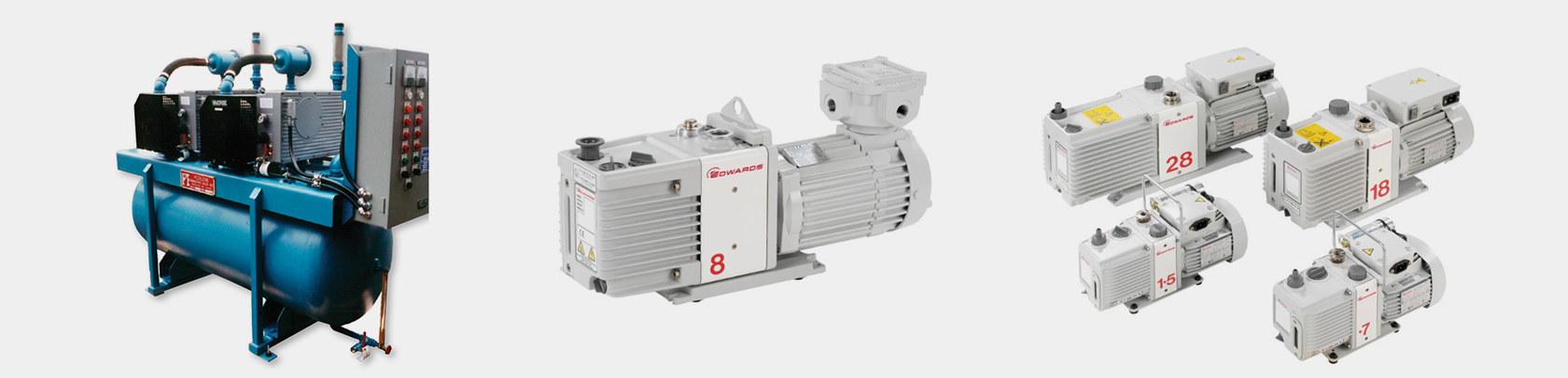
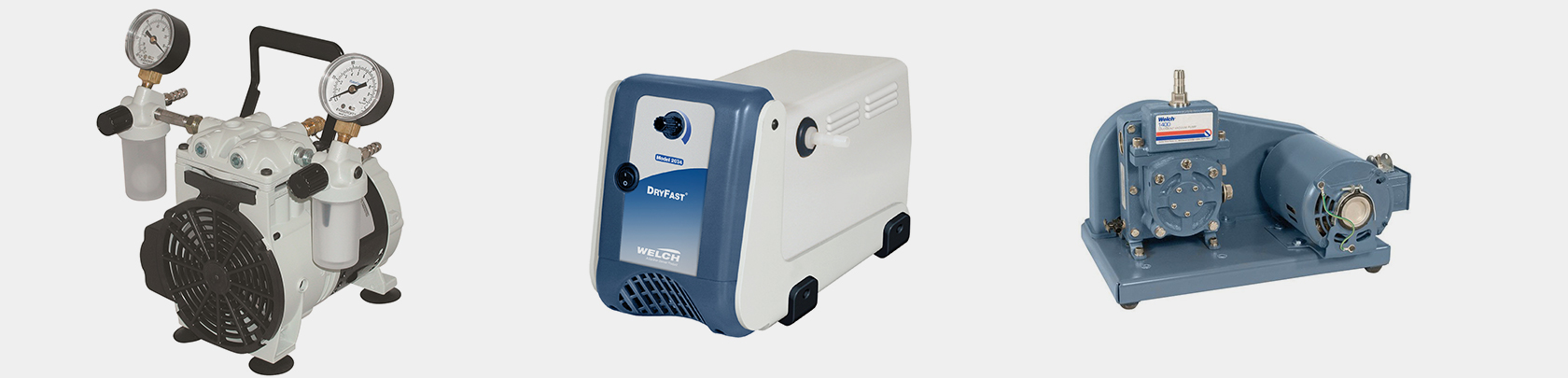
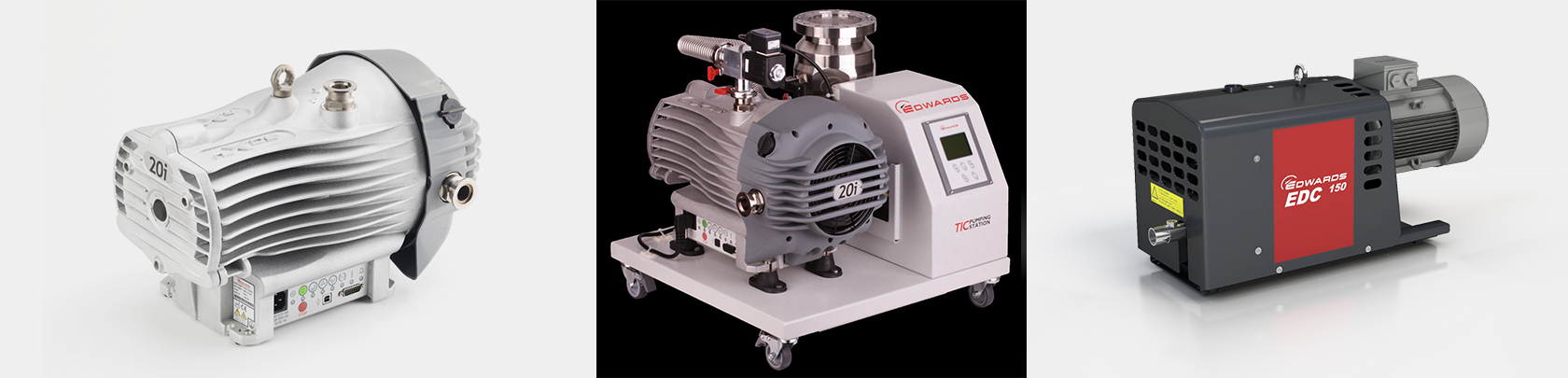
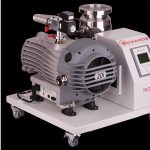
In theory at least, vacuum pumps are ‘merely’ air compressors run backwards — with the inlet attached to a machine you want to apply vacuum to and the outlet open to the air. In fact, for smaller, at-home uses, an air compressor and a vacuum pump are literally the same machine, you just decide which end you want to use and attach whatever your attaching to the appropriate end.

In industrial uses, however — in sizes that affect entire machining plants or other large-scale operations — the machines differ in small ways that enhance the efficiency of one operation over the other. And only very specifically-made machines should be used as both a vacuum generator and a compressor at the same time; the doubled load will run any machine not carefully built to withstand it.

There are three things you need to know about a vacuum pump: the strength of the vacuum it can produce, the rate at which it moves air, and the amount and quality of electricity it takes to use.

Vacuum Strength
Vacuum strength is measured in absolute pressure (mmHg), where the smaller the number, the power powerful the vacuum. Standard atmospheric pressure is 760 mmHg at sea level, so anything less than that is a form of vacuum. Most large pumps are rated once, for continuous-duty use. Small pumps, which can have problems with overheating at high loads, usually have a continuous-duty rating and an intermittent-duty rating showing how much it can produce for short times before it needs a break.

Flow Rate
Vacuum pumps are flow rated according to how quickly they can move air when both sides of the pump are at equal pressure (i.e. open to the air.) Of course, as the vacuum on one side of the pump increases, air flow decreases. Manufacturers can provide the curves that show what the flow rates should be as the vacuum increases.

Power Requirements
Vacuum pumps use relatively little power compared to air compressors. The aforementioned pressure-flow curves should also include the amount of drive power required as the vacuum levels change (and thus allow you to derive efficiency rates by dividing power needed by air moved at each point along the curve.)

Extend Belt Life With Some Basic Maintenance and a Conveyor Belt Cleaner

Conveyor belt life can often be unfortunately shortened by something as simple as a failure to keep the belt clean — and while the people who manufacture the belts are profiting from your loss, it can really hit your bottom line hard. Not only do you have to buy and install a new belt, but your entire process is halted while that happens, costing you days of downtime in addition to the literal cost of the belt.

There are a few different problems that can happen when you don’t maintain your belts. First, small particles can attach themselves to the inside of the belt, getting crushed into it as it passes the pulleys. This causes the belt to get stretched every time that thicker area passes over the pulleys, eventually causing the belt to slip or split at the splice.

Second, larger sharper particles can get wedged into the belt and then catch on an impact saddle or other piece of machinery and begin making a long, continuous scratch in the belt that will eventually cause the belt to split lengthwise.

Finally, particles can get into the pulley mechanism itself and build up, slowly increasing friction and either heating up the pulley or slowing it down — either one of which can result in long-term problems.

Fortunately, all you need is a bit of basic maintenance and a decent conveyor belt cleaner setup to keep your belts lasting for their full lifetimes.

  • First, use a air compressor and blow off the inside edge of the belt a few times a day. It takes only a minute if you have everything set up and in place. Alternately, use a plough scraper or, if you have a grooved belt, a belt brush set up along the inside surface of the belt.
  • Suffice it to say, the outside of the belt deserves the same or better care than the inside; getting the appropriate kind of cleaner set up for the outside surface is critical.
  • Denatured alcohol is a good cleaner for most kinds of conveyor belt. Avoid solvents or harsh cleaners unless they’re specifically intended for your kind of belt: synthetic rubber, PVC, and polyurethane are common materials in conveyor belts and all of them react violently to different cleaners. Contact your belts’ manufacturer if you have any questions.

How to Buy an Industrial Hydraulic Power Unit

Hydraulic power units (HPUs) are everywhere — many jackhammers, most auto lifts that mechanics walk under, many fishing boats’ net-haulers, almost every big yellow machine you see at a construction site all use hydraulic power units. Obviously they come in quite a variety — how do you know you’re getting the right one for your needs?

At it’s simplest, when you need a single HPU to power a single tool, the answer is usually written right on (or in the instruction booklet of) the tool in question. You need an HPU that provides at least enough actual hydraulic fluid to power the tool (for handheld tools, a half-gallon is usually all you need, but for industrial applications, a 250 gallon tank isn’t unheard of.) It also needs to supply adequate pressure to get the job done — your typical hydraulic jackhammer, for example, won’t function at less than 1300 psi.

But the simplest is hardly adequate to most industrial applications. If you’re, say, a machine shop, and you need a single hydraulic power unit that can provide hydraulic power to a dozen different metal grinders, pipe benders, sheet stampers, and so forth, you’ve got a lot more to worry about than just matching one machine’s numbers to another’s.

Fortunately, it’s still not all that difficult — many providers have or can custom-build a hydraulic manifold that can ensure that, as long as your HPU is capable of producing adequate flow and pressure to handle all of the jobs you want to simultaneously accomplish, each tool gets the right amount of fluid at the right pressure. Such a manifold will have pressure-reducing valves and both automatic and controllable switches that will ensure no machine gets too much pressure or fluid for it’s own operation, but all machines get enough of each.

Those aren’t the only details — there are other considerations that range from the possible need to move your HPU to different areas at different times, or matching the power consumption of your HPU to the type of power provided by your shop’s outlets — but those should mostly be intuitive for your typical shop manager.

Subscribe to receive updates  Product Lines

If you would like to receive new releases or updates, please subscribe here


Our Location
View headquarters' map here

© 2011 Peerless Engineering. All rights reserved.